THE ONGOING PATENT BATTLE FOR SEMAGLUTIDE: A GLOBAL OVERVIEW
INTRODUCTION:
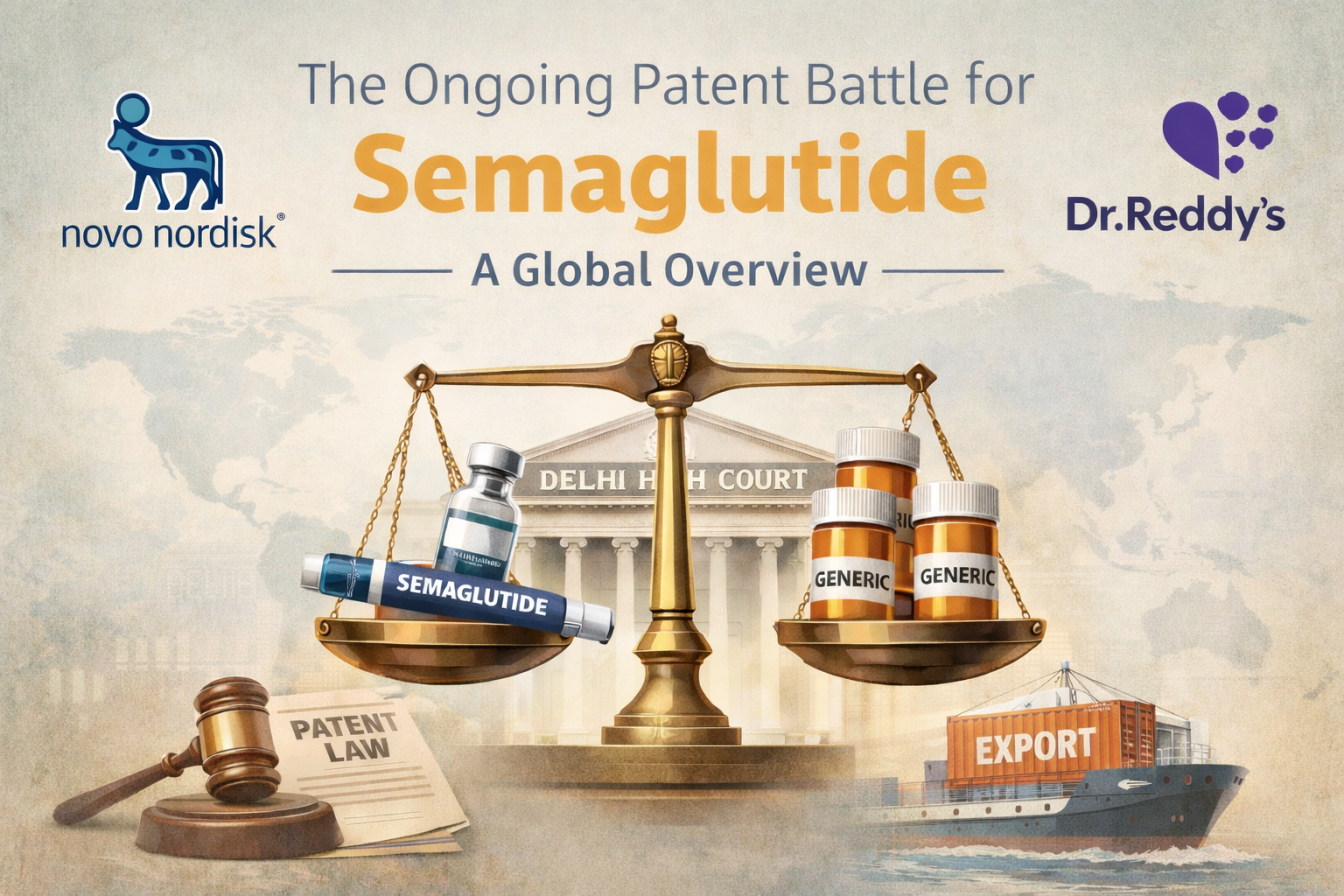
A significant patent litigation has emerged in India between global pharmaceutical innovator Novo Nordisk and domestic generic drug major Dr. Reddy’s Laboratories, concerning the blockbuster anti-diabetic and weight management drug, semaglutide. Novo Nordisk has initiated legal proceedings alleging infringement of its formulation patent (Indian Patent No. IN 262697), while Dr. Reddy’s contends that its actions are lawful and protected under statutory exemptions.
This dispute currently pending before the Delhi High Court has far reaching implications for patent enforcement, generic entry, and the affordability of essential medicines in India. With the matter listed for hearing on August 19, 2025, the outcome is likely to shape jurisprudence on Sections 48 and 107A of the Indian Patents Act, 1970, especially in the context of pharmaceutical exports.
FACTUAL BACKGROUND: PARTIES TO THE DISPUTE
In the present dispute, the Plaintiff, Novo Nordisk A/S, is a leading Danish multinational pharmaceutical company renowned for its innovation in diabetes and obesity treatment. Novo Nordisk is the original developer of semaglutide, a glucagon-like peptide-1 (GLP-1) receptor agonist used to manage blood sugar in type 2 diabetes and to aid weight loss in obesity. The company holds patents and regulatory approvals for three key semaglutide-based products: Ozempic (injectable semaglutide for type 2 diabetes), Wegovy (a higher-dose injectable for obesity), and Rybelsus (an oral formulation). These drugs are not only critical to Novo Nordisk’s product portfolio but also represent significant investments in R&D (Research and Development) and clinical trials.
Defendant No. 1, Dr. Reddy’s Laboratories Ltd. is a leading Indian pharmaceutical company engaged in the development and manufacturing of APIs (Active Pharmaceutical Ingredient), generic medicines, and biosimilars. Dr. Reddy’s has obtained approvals from India’s Central Drugs Standard Control Organization (CDSCO) to manufacture semaglutide formulations. Defendant No. 2, OneSource Specialty Pharma Ltd., is a contract manufacturer working on behalf of Dr. Reddy’s. OneSource is responsible for the actual production of the semaglutide products in question. Novo Nordisk alleges that the Defendants may be infringing its intellectual property rights or engaging in unauthorized production, potentially undermining Novo Nordisk’s exclusive rights and market position.
PATENT CLAIMS UNDER DISPUTE
Novo Nordisk’s ongoing patent litigation centers on its formulation patent IN 262697, which remains in force until March 20, 2026. Although the core compound patent IN 275964 covering the semaglutide molecule expired in September 2024, allowing generic manufacturers to potentially produce semaglutide, formulation-based protections still pose significant legal barriers. Patent IN 262697 safeguards stabilized formulations and delivery systems that enhance the drug’s bioavailability and shelf life, which are essential for therapeutic efficacy. This means that even if the semaglutide molecule itself is no longer under protection, replicating the formulation using similar stabilizing agents, preservatives, or delivery mechanisms (e.g., injection pens) could still infringe Novo’s rights. Novo also has a pending application (IN 202047010224) targeting low phenol semaglutide formulations, signaling attempts to extend exclusivity. Novo alleges infringement under Section 108 of the Patents Act, claiming Dr. Reddy’s and OneSource imported semaglutide API and manufactured final dosage forms without authorization. Dr. Reddy’s defends its actions under Section 107A(b), India’s Bolar exemption, stating its activities were solely for export and regulatory purposes. Additionally, Dr. Reddy’s has challenged the patent’s validity under Section 64, alleging lack of novelty, obviousness, and evergreening. The case represents a crucial test of balancing genuine innovation with the prevention of patent misuse.
DELHI HC INTERIM ORDER
In its interim ruling on May 29, 2025, the Delhi High Court sought to balance the competing rights of patent enforcement and legitimate export activity. The Court restrained Dr. Reddy’s and OneSource from selling semaglutide within India, emphasizing that domestic commercialization without marketing approval or patent holder authorization would prima facie infringe Novo Nordisk’s patent.
However, the Court refused to halt manufacturing and export, accepting Dr. Reddy’s assurance that it would not sell the drug in India. This distinction implicitly recognizes the potential applicability of Section 107A(b), which permits manufacture and export of a patented product for uses related to regulatory approvals in countries where the patent is not in force.
Crucially, the Court did not make a final determination on whether such exports infringe Section 48 rights. It held that this issue along with the validity of Novo’s patent, challenged under Section 64 warrants detailed examination. A full hearing is scheduled after pleadings conclude on August 19, 2025, signaling that critical questions of patent scope and statutory interpretation remain open.
CONSIDERATIONS FOR THE COURT IN PATENT REVOCATION CASE IN 262697
The Court must first assess the validity of patent IN 262697 by examining if the formulation patent reflects a genuine inventive step or if it merely extends existing disclosures, raising concerns under India’s anti-evergreening laws designed to prevent unjust patent term extensions. Additionally, the scope of Section 107A of the Indian Patent Act is critical; the Court must decide whether exporting finished drug formulations to countries where the patent does not apply qualifies as “uses reasonably related” to patent rights or constitutes unauthorized commercial exploitation. This interpretation directly affects the legality of generic exports. Lastly, the broader public interest is significant India faces a large diabetic population, and the GLP-1 market is rapidly growing, valued over Rs. 6 billion annually. The ruling will influence access to affordable generics, potentially impacting healthcare costs and availability for millions reliant on diabetes treatments, balancing patent protection against public health priorities.
CONCLUSION
The ongoing patent dispute between Novo Nordisk and Dr. Reddy’s Laboratories over semaglutide formulations marks a critical juncture for pharmaceutical patent law in India. This case challenges the extent of protection offered to formulation patents and the application of statutory exemptions under Section 48 and Section 107A of the Indian Patents Act. Section 48 grants the patentee exclusive rights to prevent third parties from making, using, selling, or importing the patented product or process without consent. Conversely, Section 107A, often referred to as the Bolar provision, allows the use, sale, or import of a patented invention solely for the purposes related to the development and submission of information required under any law in India or in a country outside India that regulates the manufacture or sale of drugs. The Delhi High Court’s interim order highlights the delicate balance between safeguarding genuine innovation and enabling lawful generic competition, particularly through exports to markets where patent protection does not exist. The final verdict is expected to set a significant precedent on key issues such as the validity of formulation patents, the prevention of patent evergreening, and the interpretation of regulatory-use exemptions under Indian law. Given the broader public health implications especially in terms of ensuring access to affordable diabetes medication for millions the judgment will likely influence India’s broader approach to reconciling intellectual property rights with public health priorities. Ultimately, this case highlights the pressing need to align innovation incentives with the societal imperative of equitable healthcare access.

Leave a Reply