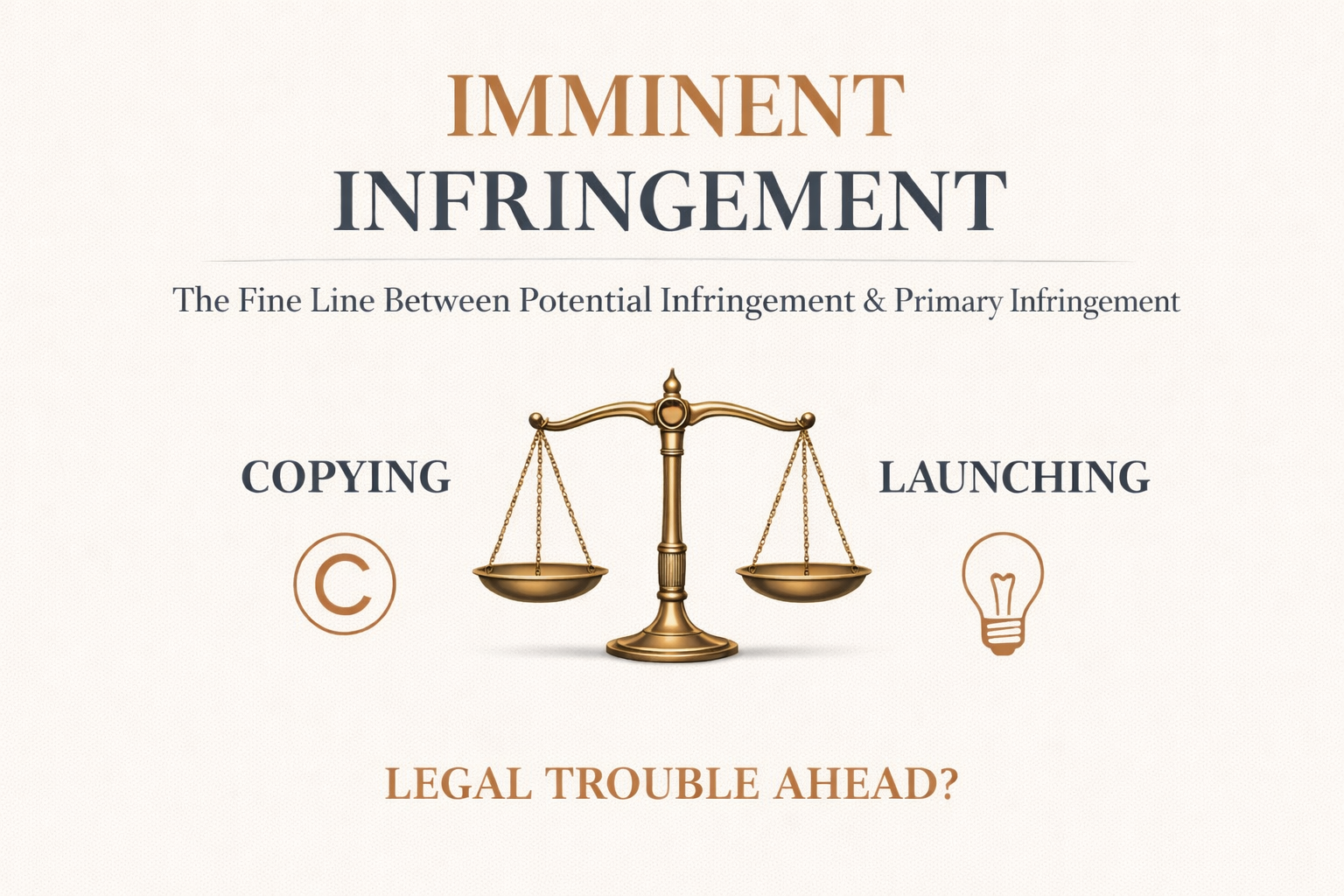
IMMINENT INFRINGEMENT: THE FINE LINE BETWEEN POTENTIAL INFRINGEMENT & PRIMARY INFRINGEMENT
In today’s fast-paced digital and creative economy, the concept of intellectual property (IP) plays a crucial role in protecting original ideas, inventions, and creative work. With billions of pieces of content shared and consumed daily from social media posts and brand names to songs, designs, and product inventions, understanding the legal boundaries of intellectual property has never been more important. One area gaining increasing attention is imminent infringement. It’s not just about what has already been stolen or copied, but what is about to be. This concept can have serious legal consequences, even before any harm has occurred.
WHAT IS IMMINENT INFRINGEMENT..?
The term imminent infringement refers to a situation where an individual or business is on the verge of violating another’s intellectual property rights. The actual infringement may not have occurred yet, but it is reasonably predictable or likely to happen very soon. This could be due to ongoing preparations such as launching a product, publishing content, or marketing a service that clearly mirrors someone else’s protected work.
For example:
- A company is about to launch a smartphone that uses technology patented by another firm.
- A clothing brand is preparing to release a line of products that copies the logo design of a competitor.
- A music producer is about to upload a remix that heavily samples a copyrighted track without permission.
WHY IT MATTERS:
In the world of intellectual property, timing is everything. If the law waited for an infringement to occur and damage to be done, the cost both financially and reputationally could be severe for the original rights holder. Courts recognize this, and in many jurisdictions, legal action can be taken preemptively to stop potential violations before they materialize.
This is particularly important for:
- Trademark owners, who must protect their brand identity from confusion.
- Patent holders, who risk losing market share to copied innovations.
- Copyright creators, who depend on exclusive rights to monetize their work.
By addressing infringement at the “imminent” stage, IP holders can prevent broader misuse, protect their business, and maintain brand integrity.
UNDERSTANDING INTELLECTUAL PROPERTY BOUNDARIES:
Intellectual property rights are designed to protect creators while still allowing others to build upon existing ideas in fair, non-exploitative ways.
Here’s a brief refresher on the main types of IP protection:
- Copyright protects original creative works books, music, films, code, etc.
- Trademarks protect brand identifiers like slogans, logos and names.
- Patents protect inventions, processes, and certain designs.
- Trade secrets protect confidential business information that gives a competitive edge.
Each of these has its own rules for what counts as infringement and how close you can get before, you’re in violation. But the core idea is the same: using someone else’s protected work without permission intentionally or not can get you into legal trouble.
HOW THE LAW RESPONDS TO IMMINENT INFRINGEMENT:
When it becomes clear that someone is about to infringe on intellectual property rights, courts may issue what’s known as a preliminary injunction, a legal order to immediately stop certain actions until a full legal review is conducted.
To obtain an injunction, the IP owner typically needs to show:
- Clear Evidence: That the defendant is preparing to engage in infringing activity.
- Irreparable Harm: That the infringement, if allowed to proceed, would cause damage that cannot be fixed later (e.g., brand dilution, lost sales).
- Likelihood of Success: That they are likely to win the case based on available facts.
- Public Interest: That stopping the infringement would benefit the public or consumers (especially in cases involving confusion or fraud).
The mere intention or preparation to infringe can sometimes be enough for courts to intervene.
REAL-WORLD EXAMPLES:
- Product Launch Disputes
Tech companies often find themselves in court over patent concerns before a product hits the market. For instance, Apple and Samsung have had numerous disputes where one accused the other of preparing to release phones that allegedly infringed on patented designs or software features.
- Trademark Similarity
If a new company tries to register a logo or brand name that is very similar to an existing one even if they haven’t started selling anything, the original owner can file an opposition or request an injunction based on imminent confusion.
- Content Uploads
In the music and entertainment world, artists sometimes leak or preview upcoming songs that contain unlicensed samples. Even before full release, copyright holders can take action to stop further distribution or demand takedowns.
HOW FAR CAN YOU GO BEFORE IT’S TOO FAR?
- Don’t Wait for a Lawsuit to Define the Line
If you have to ask whether your work is “too similar,” it probably is. Being proactive in researching existing rights and seeking legal advice is far better than reacting to a cease-and-desist letter.
- Originality is Key
The safest route is always to create original content, designs, or inventions. Avoid taking shortcuts by copying, modifying, or mimicking protected works unless you have clear permission.
- Use Proper Licensing
If you are using someone else’s content, be it music, images, code, or branding elements make sure you have obtained the correct license or agreement to do so.
- Conduct Clearance Checks
For businesses launching new products or marketing campaigns, doing a trademark search, patent check, or copyright clearance can save you from future legal trouble.
CONCLUSION:
In the ever-evolving landscape of creativity and innovation, understanding the boundaries of intellectual property law is no longer optional, it’s essential. Imminent infringement serves as a critical reminder that crossing the line doesn’t always require actual harm or finalized misuse; sometimes, just being close enough can trigger serious legal consequences. For creators, businesses, and innovators alike, the key is to proceed with caution, diligence, and respect for existing rights. Whether launching a new product, developing content, or building a brand, taking the time to ensure originality and legal compliance can prevent costly setbacks, reputational damage, and lengthy litigation. Ultimately, intellectual property law is designed not to stifle innovation, but to protect it. By staying informed, conducting proper clearances, and seeking appropriate permissions, individuals and companies can thrive creatively without stepping into legal jeopardy.
Leave a Reply