
Calcutta High Court Refuses to Hold 20-Year Patent Term from Date of Application as Unconstitutional
INTRODUCTION
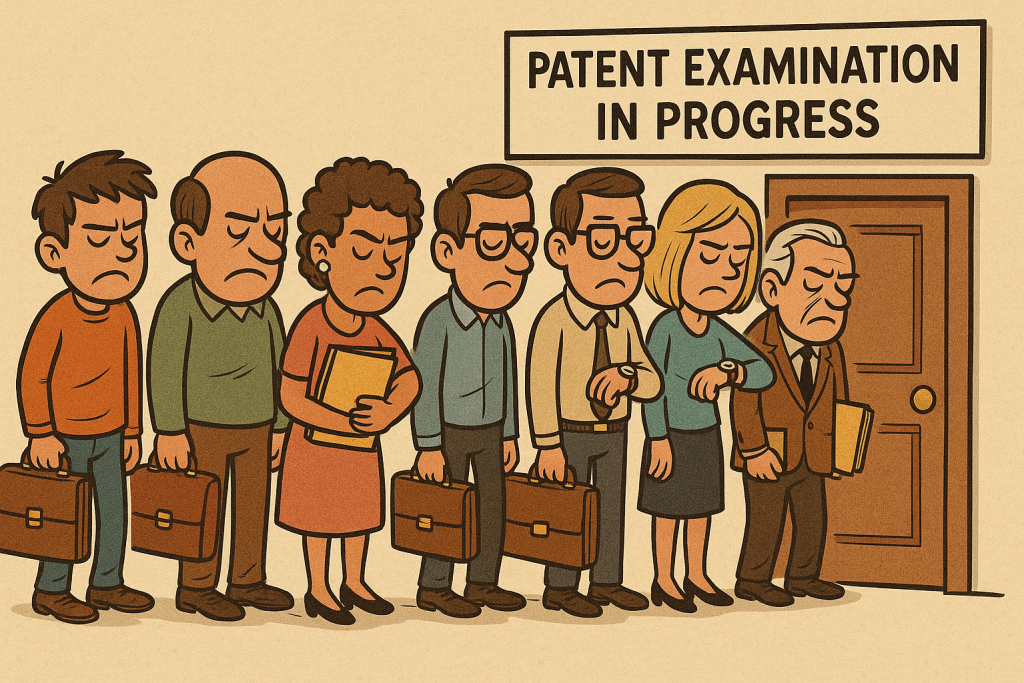
In a significant judgment shaping the landscape of Indian intellectual property law, the Calcutta High Court recently ruled that the 20-year patent term counted from the date of application under Section 53 of the Patents Act, 1970, is not unconstitutional. This issue arose when a petitioner, Gunjan Sinha (also known as Kanishk Sinha), approached the court arguing that the patent term unfairly begins from the date of filing rather than the date of grant. The concern stemmed from delays in examination and grant by the patent office, during which patentees are left without enforceable rights, despite time ticking on their patent life. Initially, a Single Judge upheld the validity of Section 53, rejecting the petitioner’s claim. An appeal was then filed before a Division Bench, which also dismissed the constitutional challenge on April 22, 2025, thereby affirming that any possible policy reform in this area should be initiated by the legislature, not the judiciary.
BACKGROUND
The Indian Patents Act, 1970, provides a uniform 20-year patent term starting from the date of filing the application, as outlined in Section 53. This provision is consistent with India’s obligations under the TRIPS Agreement (specifically Article 33), which requires member nations to provide a minimum term of 20 years from the filing date. Additionally, Section 11A(7) of the Patents Act outlines a three-stage model of patent rights. First, from the date of application to the date of publication, the applicant holds no enforceable rights. Second, from publication until the patent is granted, the applicant is granted limited protection “like” rights allowing retrospective enforcement but not active litigation. Finally, upon grant, the applicant is entitled to full patent rights, enforceable in courts. The petitioner’s challenge centered around the gap between the filing and grant date often several years long during which time the patent term is running, yet the patent cannot be enforced. This, the petitioner argued, reduces the effective patent life and undermines the economic value of the invention.
LEGAL GROUNDS: THE CONSTITUTIONAL CHALLENGE TO SECTION 53
The petitioner argued that the system created by Section 53 was internally inconsistent and constitutionally flawed. Specifically, they claimed that starting the patent term from the date of filing, while granting enforceable rights only after the patent is issued, violates the right to equality under Article 14 of the Indian Constitution. According to the petitioner, patentees are subject to arbitrary delays in processing by the patent office, which unfairly erodes their ability to enjoy the full term of the patent, especially in sectors like pharmaceuticals where every year of exclusivity can be critical. Additionally, they argued that this framework violates the principle of substantive legal rights, as it theoretically grants a 20-year monopoly while practically shortening the window during which a patent can be commercially enforced. The core of the constitutional challenge was that the law, as it stood, failed to offer fair treatment to patentees and allowed state inaction (through delays) to curtail valuable private rights.
ARGUMENTS BY PARTIES
The petitioner made advanced multiple arguments, both legal and policy oriented. First, they contended that the patent term must start from the date of grant, not the date of application, to ensure that the patentee receives the full benefit of exclusivity. They highlighted that other jurisdictions, including some older systems, tied term calculation to the grant date and emphasized how delays in the Indian patent system routinely rob inventors of several years of effective protection. Second, they argued that the unequal length of effective patent terms for different applicants, depending solely on administrative delays, violated Article 14 by treating similarly placed individuals unequally.
In response, the Union government and respondents defended the current system. They argued that Section 53 and Section 11A(7) operate in harmony, each addressing a different phase of the patent lifecycle. While Section 53 defines the duration of the patent, Section 11A(7) outlines when rights become enforceable. The government further argued that India is in full compliance with TRIPS obligations, which require a minimum 20-year term from the date of filing, not the date of grant. Deviating from this model would not only breach international obligations but could also introduce uncertainty in the patent regime. Additionally, the respondents emphasized the principle of judicial restraint, stating that matters of legislative policy should not be second-guessed by the courts unless there is clear arbitrariness or unconstitutionality, neither of which were present in this case.
THE HIGH COURT’S VERDICT
In its final verdict delivered on April 22, 2025, the Division Bench of the Calcutta High Court upheld the constitutionality of Section 53. The court reiterated that the Indian patent regime follows a structured, phased approach to rights acquisition, and that the 20-year term from the date of filing is both logical and legally consistent. It found no internal conflict between Section 53 and Section 11A(7), holding that limited rights accruing after publication and full rights after grant are a reasonable legislative scheme. The court firmly rejected the idea that unequal delays in patent processing violated Article 14, stating that all applicants are subject to the same legal process and that procedural delay alone does not establish unconstitutional discrimination.
The court also emphasized India’s obligations under the TRIPS Agreement and noted that the current system aligns with international standards. It declined to issue any directive to modify the patent term, stating that any such adjustment, such as through a system of patent term extensions or adjustments (like in the U.S.), would be a matter for Parliament. The court maintained that judicial overreach in a matter of economic policy would be inappropriate and inconsistent with constitutional principles of separation of powers.
BROADER IMPLICATIONS
This judgment has significant implications for inventors, companies, and patent professionals in India. It reinforces the need for applicants to strategically manage their filings, considering the real possibility of examination delays reducing the effective period of protection. For industries like pharmaceuticals and biotech where patent terms are crucial for recouping research and development investments this decision may encourage advocacy for legislative reforms, such as expedited examination procedures or the introduction of patent term adjustments. However, until such reforms are enacted, patentees must accept that delays in grant effectively reduce the window in which they can fully enforce their patent rights.
Moreover, the court’s reasoning provides reassurance that India’s patent laws are compliant with global norms, especially the TRIPS Agreement. This promotes stability and predictability for international businesses and investors operating in India. It also sets a precedent for how Indian courts are likely to treat future challenges to IP law based on constitutional grounds favoring legislative authority unless clear discrimination or arbitrariness is evident.
CONCLUSION
The Calcutta High Court’s decision clearly upholds the constitutionality of Section 53 counting patents for 20 years from application. The ruling reinforces that any pause in enforcement due to delayed grant is a procedural hiccup, not a constitutional flaw. It also places responsibility firmly on the legislature to address systemic delays and consider reforms like PTAs.


Leave a Reply