
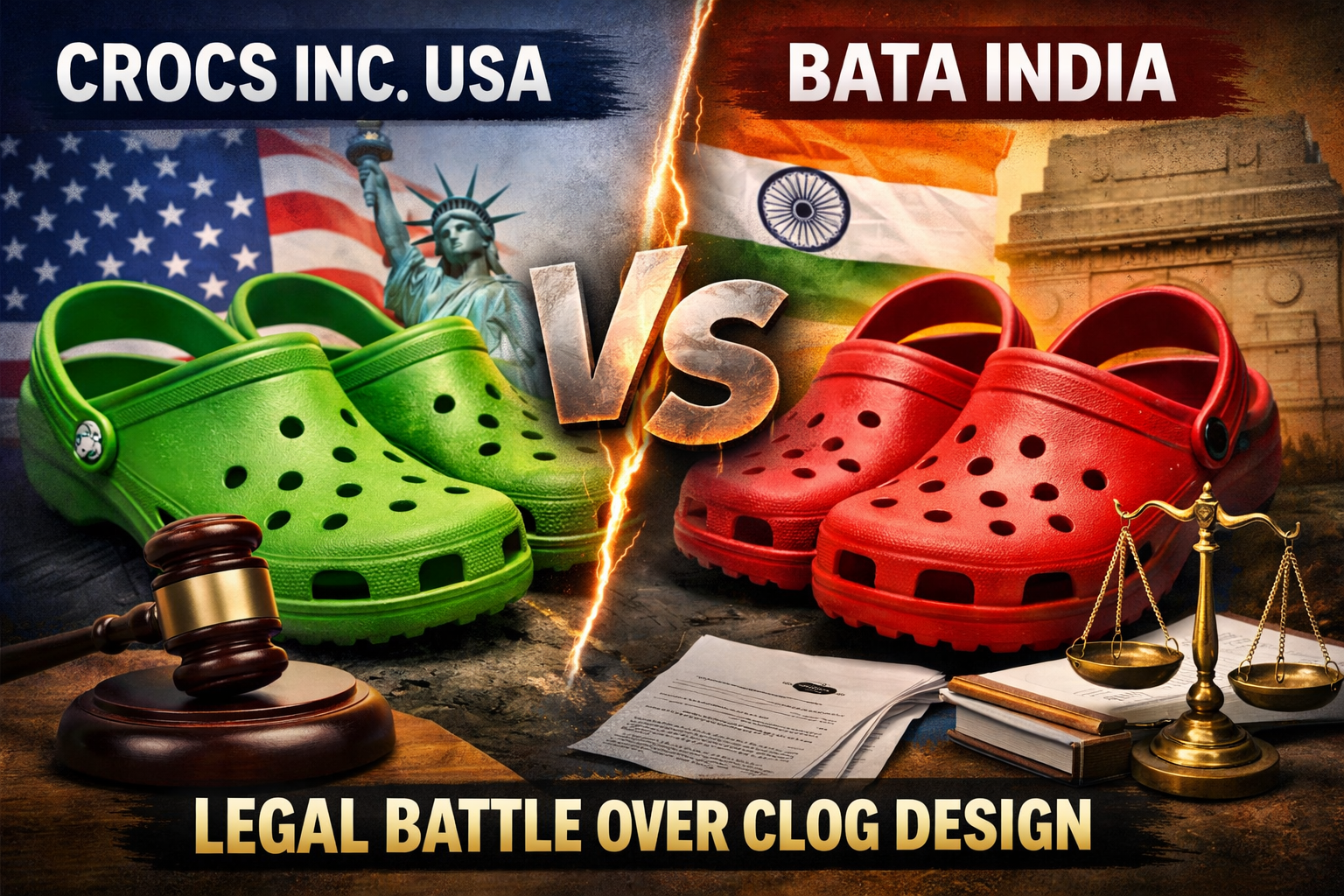
M/S Crocs Inc Usa vs M/S Bata India
INTRODUCTION
Crocs Inc., the U.S.-based footwear company, is globally known for its unique clog-style shoes made from Croslite, a proprietary foam resin. As its products gained popularity, several Indian footwear brands like Bata, Relaxo, and Liberty began manufacturing and selling similar designs in India. To protect its intellectual property, Crocs initiated legal proceedings in India for design infringement and passing off. The legal battle that followed raised key questions about the overlap between registered design protection and common law rights.
BACKGROUND OF THE CASE
Crocs Inc., a Colorado-based company, is best known for its unique clog-style shoes made from a proprietary resin material. These shoes, which feature a distinctive shape and pattern of ventilation holes, gained immense popularity worldwide, including in India. To protect its design, Crocs registered its clog under the Designs Act, 2000, in India. Over the years, Crocs developed significant brand recognition and goodwill, both globally and in the Indian market.
On the other hand, Bata India Ltd., along with other Indian footwear brands like Liberty and Relaxo, introduced similar-looking clog-style shoes at more affordable prices. These competing products mimicked the basic design of Crocs’ clogs, including their shape and perforation pattern. Crocs alleged that these similarities were not coincidental but deliberate attempts to imitate their design and trade dress, misleading consumers and leveraging Crocs’ market presence.
LEGAL GROUNDS:
At the heart of this dispute are two key legal concepts: design infringement under the Designs Act, 2000, and passing off under common law. Design infringement involves the unauthorized application of a registered design to a product. Under Section 2(d) of the Designs Act, a “design” refers to the features of shape, configuration, pattern, or ornament applied to any article. Crocs’s contention is that Bata and others copied its registered design in a manner that constitutes “fraudulent or obvious imitation,” violating its exclusive rights under Section 22 of the Act. Passing off, on the other hand, is a common law remedy that protects the goodwill of a brand. It is intended to prevent one party from misrepresenting its goods as those of another, thereby causing confusion among consumers. Crocs argued that even if its design registration expired or was challenged, the look and feel of its product referred to as “trade dress” had become so distinctive that it deserved protection under passing-off principles.
The crux of the legal issue lay in whether Crocs could simultaneously pursue claims under both the Designs Act and the common law remedy of passing-off. The single judge had ruled that design protection under the Act was an exclusive remedy, thereby rejecting the maintainability of the passing-off claim. However, this interpretation was overturned in July 2025 by the Division Bench, which held that statutory and common law rights could co-exist.
DELHI HIGH COURT RULING (2025)
On 1 July 2025, the Division Bench of the Delhi High Court delivered a landmark judgment in Crocs’s favor, reinstating the passing-off claims and allowing the suits to proceed to trial. The court clarified that design registration does not bar a party from seeking passing-off remedies. It relied on key precedents, including Mohan Lal v. Sona Paints and the Carlsberg case, which recognized the parallel existence of statutory and common law IP rights. The court stated that if the registered design has acquired distinctiveness and consumers associate it with a particular source here, Crocs can qualify as trade dress. Therefore, the plaintiff does not have to prove any additional distinguishing features for a passing-off claim. This ruling reaffirmed the principle that statutory rights under the Designs Act do not eclipse the protection granted under common law for misrepresentation and loss of goodwill.
IMPLICATIONS OF THE DECISION
This decision has far-reaching implications for both legal practitioners and businesses. Firstly, it clarifies that design owners are not limited to the Designs Act for protection. They can also rely on common law to safeguard their brand identity. This dual remedy approach strengthens IP enforcement, especially when a design has acquired market recognition.
For Indian companies, the ruling is a cautionary tale. Businesses must tread carefully when launching products that resemble popular designs, as similarities in appearance may now trigger both statutory and common law liability. This could lead to greater innovation and differentiation in product design, especially in competitive industries like footwear.
Moreover, the case underscores the importance of trade dress and its evolving role in Indian jurisprudence. As consumer awareness grows and branding becomes more visual, courts are increasingly acknowledging the need to protect non-traditional marks like packaging, shape, and product configuration.
APPEAL & REVERSAL
In April 2025 Appeal Heard, Crocs challenged the 2019 dismissal before a Division Bench of the Delhi High Court, arguing that: The passing off claim was independent of the Designs Act. Visual appearance can acquire distinctiveness even if not novel as per design law. In July 1st and 2nd , 2025 the Division Bench overturned the 2019 decision and revived Crocs’ suits, ruling the Passing off and design infringement are distinct legal remedies. Even if a design is registered, an entity can still claim protection for its trade dress or get-up under common law. Crocs is entitled to prove its case based on goodwill, consumer association, and reputation in the Indian market. The court directed all suits to be reconsidered by a Single Judge, allowing Crocs to proceed with full trials.
CURRENT STATUS
- All six suits by Crocs have been revived.
- The case has been sent back to a Single Judge Bench for hearing on merits.
- Crocs now has the opportunity to prove:
- Market reputation in India
- Actual misrepresentation by Indian brands
- Consumer confusion
CONCLUSION
This case marks a significant moment in Indian IP law, where the court has clarified the coexistence of statutory design rights and common law remedies. The Delhi High Court’s decision strengthens the position of global IP holders like Crocs by affirming their ability to pursue parallel legal routes to protect their brand. For businesses, this judgment sends a strong signal about the importance of respecting both design registrations and distinctive product appearances.


Leave a Reply