INTRODUCTION:
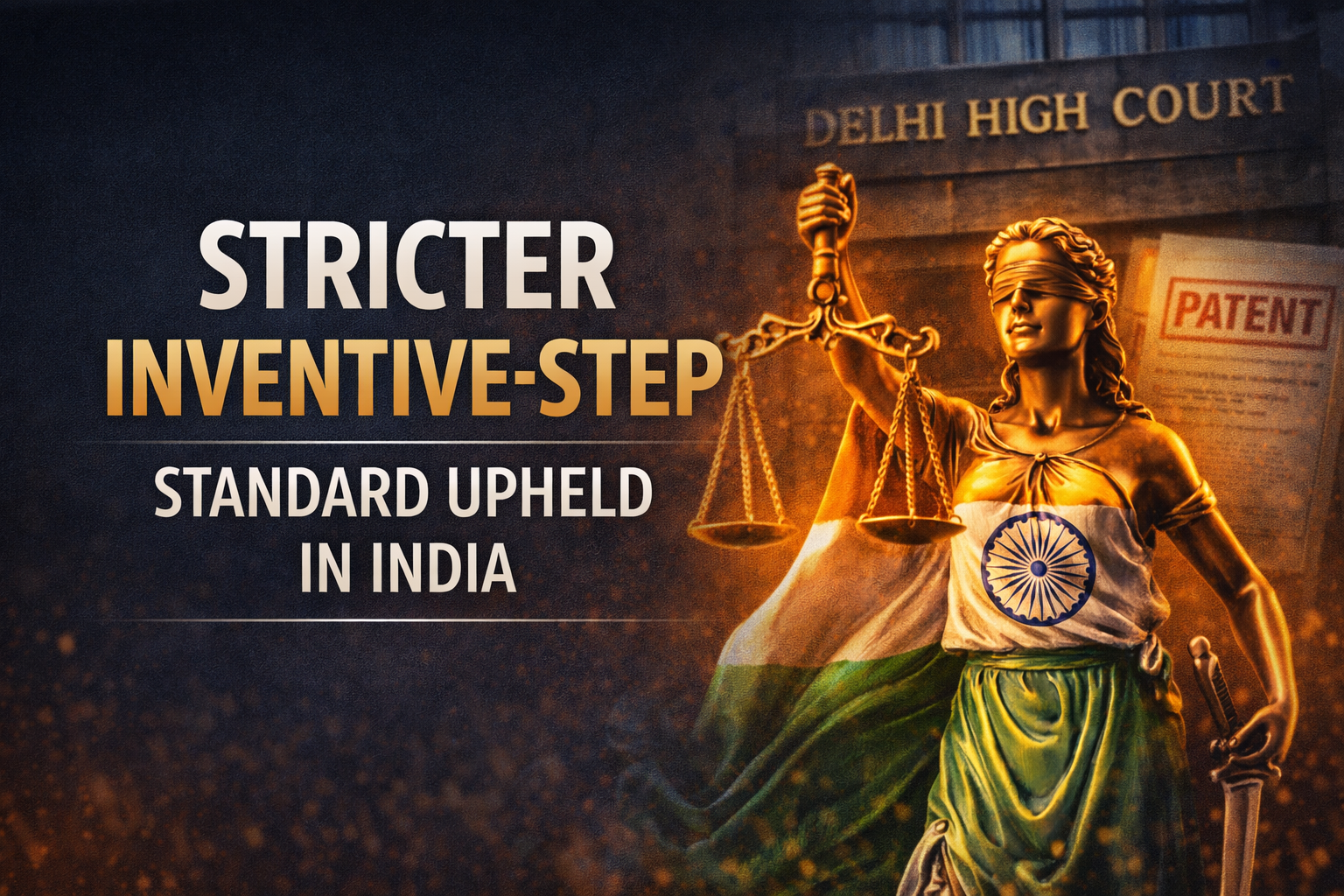
In a significant development in India’s patent jurisprudence, the Delhi High Court recently upheld the rejection of Saint-Gobain’s patent application for its glass-coating technology. As explained by Srishti Gaur, a third-year student at National Law University, Delhi, the Court reaffirmed two foundational pillars of patent law novelty and non-obviousness. The judges held that Saint-Gobain had failed to demonstrate a genuine inventive step, emphasizing that innovation must go beyond what a skilled person in the field could already deduce. Importantly, the Court also rejected the argument that a patent should be granted merely because it had been approved in foreign jurisdictions, underscoring India’s independent and rigorous patentability standards. This ruling not only impacts Saint-Gobain’s strategy in the country but also reinforces how strictly Indian courts interpret the “inventive step” requirement. The decision stands as a critical reminder for innovators to substantively justify their claims when seeking patent protection.
BACKGROUND: SAINT-GOBAIN’S PATENT APPLICATION:
Saint-Gobain, headquartered in France, is globally recognized for pioneering solutions in building materials, including high-performance glass. The company has consistently invested in research and development to create innovative coatings that enhance glass properties such as durability, scratch resistance, and thermal insulation.
In its Indian patent application no. 201717045317, Saint-Gobain claimed a novel coating method for glass surfaces. The coating process allegedly offered improvements in performance, potentially creating new commercial applications in architecture, automotive, and industrial design. The goal of the application was to secure exclusive manufacturing and usage rights in India, thereby protecting its R&D investment and gaining a strategic advantage in a highly competitive sector. However, the application faced challenges from the examination stage itself, including a pre-grant opposition and objections from the Controller of Patents under Sections 2(1)(ja), 25(1)(e), and 59 of the Patents Act, 1970, relating to novelty, inventive step, clarity, and scope. Ultimately, the Controller rejected the application on 5 January 2024, citing a lack of inventive step, a decision that was subsequently upheld by the Delhi High Court on 11 September 2025.
Legal Framework: Inventive Step in Indian Patent Act
In India, patents are governed by the Patents Act, 1970. For an invention to be patentable, it must meet the following key criteria:
- Novelty: The invention must be new and not disclosed in any prior art.
- Inventive Step (Non-obviousness): The invention should not be obvious to a person skilled in the art.
- Industrial Applicability: It must be capable of being made or used in some form of industry.
Among these, the inventive step is often the most contentious. Under Section 2(1)(ja) of the Patents Act, an inventive step is defined as a feature of an invention that involves technical advancement and/or economic significance and that is not obvious to a person skilled in the art.
The emphasis on the inventive step ensures that patents are granted only for genuine innovations, not for minor tweaks or trivial modifications of existing technologies.
OBJECTIONS AND EXAMINATION PROCESS:
During the prosecution of the patent, the Indian Patent Office (IPO) raised objections against Saint-Gobain’s application, specifically questioning the novelty and inventive step of the claimed coating technology. The objections were supported by prior art references, which included earlier publications and patents disclosing similar methods of applying functional coatings to glass surfaces. These references suggested that the technical features of Saint-Gobain’s process were already known or could be derived through routine experimentation. Despite Saint-Gobain’s submissions defending the uniqueness and advantages of its invention, the examiner concluded that the differences from prior art were too minor to constitute an inventive step. Saint-Gobain challenged this finding in the Delhi High Court, arguing that the process involved technical improvements warranting patent protection.
DELHI HIGH COURT’S RULING: LACK OF INVENTIVE STEP:
After examining the matter, the Delhi High Court sided with the Patent Office. The court upheld the rejection of the patent application, making the following key observations:
- Marginal Differences from Prior Art
The court found that the claimed invention demonstrated only insignificant differences from existing technologies. These differences were not of a nature that would be considered inventive under Indian Act.
- Obvious Modifications to Existing Techniques
The coating method appeared to be an obvious extension of known methods in the field. The court noted that a person skilled in glass coating technologies would find it straightforward to arrive at the claimed invention using common knowledge and standard engineering practices. - No Technical Advancement or Economic Significance
The court also found no substantial technical advancement or economic benefit over what was already available. As such, the invention failed to meet both limbs of the definition under Section 2(1)(ja).
- Compliance with Indian Patent Act Principles
Importantly, the judgment emphasized that patent rights are monopolistic in nature, and as such, must be granted only where a clear inventive contribution can be demonstrated. Granting patents for minor or obvious improvements would clog the public domain and hinder innovation.
COMPARATIVE PERSPECTIVE: INVENTIVE STEP IN OTHER JURISDICTIONS:
Interestingly, standards for inventive step (or non-obviousness) vary across jurisdictions. For instance:
- United States applies the “non-obviousness” standard under Section 103 of the U.S. Patent Act, often using the Graham factors.
- European Patent Office (EPO) uses the “problem-solution approach”, a more structured method to assess whether an invention is obvious.
While these jurisdictions also guard against trivial innovations, India’s approach is often considered more conservative, particularly in the pharmaceutical and chemical sectors. The Saint-Gobain ruling reaffirms this conservative trend.
INDUSTRY REACTIONS AND FUTURE OUTLOOK
While Saint-Gobain has not made public statements about the verdict, industry observers note that this case reflects the increased scrutiny patents face in India. Especially in sectors like glass, chemicals, and materials engineering, where many innovations are iterative, patent applicants will need to build stronger technical arguments and differentiation from prior art.
Patent attorneys suggest that innovators may need to:
- File multiple layered applications, including method, product, and system claims.
- Include experimental data and comparative examples.
- Proactively anticipate and address examiner objections in initial filings.
Moreover, this judgment may influence innovation policy discussions around balancing patent protection with public interest in competitive access to technology.
CONCLUSION:
The Delhi High Court’s rejection of Saint-Gobain’s patent application for glass coating technology underscores India’s rigorous approach to assessing inventive step under the Patents Act, 1970. The court found the claimed invention to be an obvious modification of existing techniques, lacking both technical advancement and economic significance. This ruling reaffirms that patent protection in India is reserved for genuine innovations that contribute meaningfully to technological progress, not for incremental or routine improvements. For inventors and corporations, it highlights the importance of demonstrating clear novelty and inventive merit, supported by comparative data and technical justification. The decision also strengthens India’s commitment to maintaining a balanced patent ecosystem one that rewards true innovation while safeguarding public access and preventing monopolies on trivial developments. As a precedent, it will likely influence future patent filings, especially in material science and chemical sectors, encouraging more substantive and evidence-based innovation strategies.

Leave a Reply