INTRODUCTION
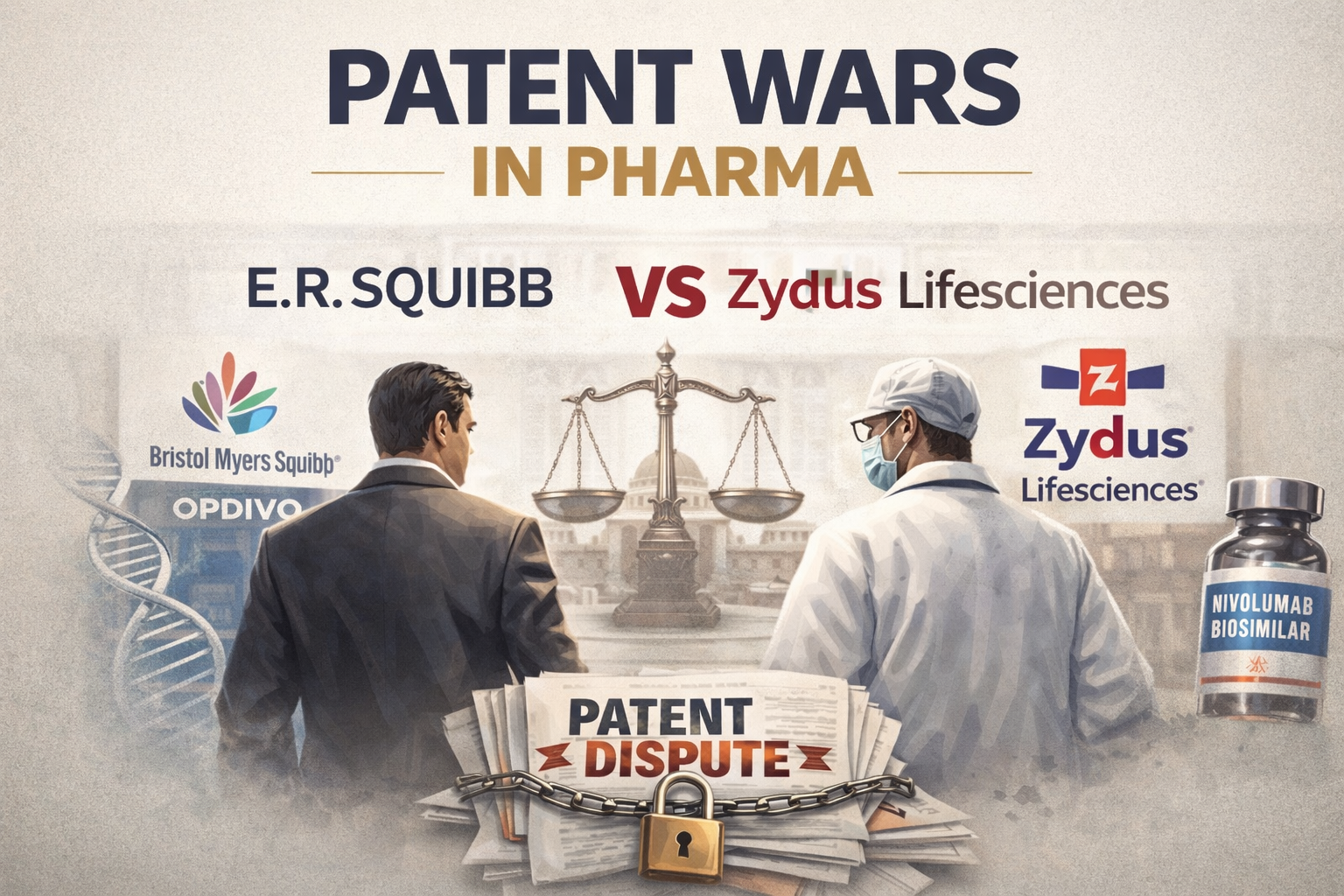
In a legal battle that could shape the future of biosimilar litigation in India, pharmaceutical giant E. R. Squibb & Sons, LLC, a subsidiary of Bristol-Myers Squibb (BMS), is locked in a fierce patent infringement dispute with Zydus Lifesciences Limited, one of India’s major homegrown pharmaceutical companies. The fight is centered around a life-saving drug used in cancer immunotherapy: Nivolumab, marketed internationally by BMS under the brand name Opdivo® and in India as Opdyta®. This case is currently before the Delhi High Court, is being watched by the biopharma sector and legal observers for the precedent it may set concerning patent enforcement, biosimilar development, and the applicability of the Bolar exemption in India. Here’s how the battle unfolded and why it matters.
BACKGROUND
At the heart of the dispute is Indian Patent No. 268060, granted to E. R. Squibb for Nivolumab. The patent was issued on 1 July 2020, after the company successfully navigated four pre-grant oppositions including one from a Zydus group company. The patent claims a human monoclonal antibody sequence targeting PD-1 (Programmed Death Receptor-1), which plays a crucial role in immunotherapy for multiple types of cancer, including melanoma, non-small cell lung cancer, and renal cell carcinoma.
The patent is set to expire on 2 May 2026, giving BMS a narrow window of exclusivity in India. However, with biosimilars emerging globally and India’s generic drug industry being one of the most aggressive in the world, the company anticipated challenges to its monopoly. Those fears were realized when Zydus initiated steps to launch a biosimilar of Nivolumab, code-named ZRC-3276.
TIMELINE OF EVENTS FROM REGULATORY APPROVAL TO LEGAL ACTION
The timeline of this legal battle is complex and revealing. In April 2022, Squibb discovered that Zydus had filed for approval with the Central Drugs Standard Control Organization (CDSCO) to conduct clinical trials for its proposed Nivolumab biosimilar. Alarmed, Squibb sent a cease-and-desist letter, asserting that even regulatory steps toward commercialization could amount to patent infringement. Zydus replied by invoking the Bolar exemption, which allows manufacturers to use patented inventions for obtaining regulatory approval without it constituting infringement.
By September 2022, Zydus had received the CDSCO’s green light to begin clinical trials for ZRC-3276. For over a year, the matter remained in limbo. But by early 2024, Squibb alleged that Zydus’s activities indicated preparations for a commercial launch before the patent’s expiration. This triggered the filing of a quia time action a preventive lawsuit filed in anticipation of a wrongful act before the Delhi High Court.
On 8 May 2024, the court issued an interim restraining order, barring Zydus from launching its product without prior permission. However, the real turning point came on 18 July 2025, when Justice Anish Dayal of the Delhi High Court granted a temporary injunction against Zydus, preventing the company from manufacturing, importing, or selling the biosimilar until further orders or patent expiry.
LEGAL REASONING
In his detailed judgment, Justice Dayal established that Squibb had made out a prima facie case of infringement. Despite Zydus not having launched the product yet, the court considered evidence from Zydus’s regulatory filings including references to Opdivo in comparative studies as sufficient to infer commercial intent and potential infringement. Zydus had sought to shield its activities under the Bolar exemption, a legal provision that permits the use of a patented invention solely for purposes related to the development and submission of information required under any law regulating the manufacture or sale of drugs.
Bolar Exemption Originating from U.S. law and adopted into Indian patent jurisprudence under Section 107 A of the Indian Patents Act, the Bolar exemption allows generic or biosimilar manufacturers to begin the approval process before patent expiry, ensuring that affordable alternatives are available as soon as exclusivity ends. However, its scope remains a grey area in Indian law—particularly whether it protects activities that go beyond clinical trials and verge on launch preparations. In this case, the court rejected Zydus’s reliance on the exemption, clarifying that while clinical trials may fall under its protection, preparatory steps for commercial launch do not. This interpretation significantly narrows the safe harbor zone for biosimilar companies and strengthens the hand of patent holders in pre-launch disputes.
ZYDUS PUSHES BACK: APPEAL IN PROGRESS
Unwilling to accept the setback, Zydus has filed an appeal before a Division Bench of the Delhi High Court. The appeal challenges the single-judge order, likely on the grounds that the injunction is premature, speculative, and unduly obstructive to innovation and competition in the biosimilar space. Zydus argues that its actions remain within the bounds of the Bolar exemption and that a full trial is needed to determine actual infringement. The appellate court has yet to decide, and until then, the temporary injunction remains in place, preventing Zydus from launching its Nivolumab biosimilar in India.
BROADER IMPLICATIONS
The E. R. Squibb vs Zydus case represents a pivotal moment in Indian pharmaceutical jurisprudence, especially regarding biologics and biosimilars. It raises critical questions:
- How far does the Bolar exemption stretch?
- Can regulatory filings alone justify a claim of impending infringement?
- Is the doctrine of equivalents compatible with India’s patent regime, which requires strict adherence to claim language?
For innovators like BMS, the judgment reaffirms the strength of Indian courts in protecting patent rights. For generic and biosimilar manufacturers, it sends a clear signal: “Clearing the way” that is, invalidating or working around a patent may be essential before launching, or even preparing to launch, a biosimilar. In broader terms, the case may push Indian regulators and policymakers to reassess the relationship between drug approval pathways and intellectual property rights, particularly in a landscape dominated by global health equity concerns and the push for affordable access to critical medicines.
CONCLUSION
While the final word is yet to come, the interim relief granted to E. R. Squibb suggests that Indian courts are willing to interpret patent rights expansively in the context of biosimilars especially when regulatory filings strongly mirror the patented product. Whether this becomes a precedent-setting decision or gets overturned on appeal will be critical not just for the parties involved but for the entire bio-pharmaceutical ecosystem in India. As biosimilars continue to grow in global relevance, and as India remains a hub for affordable medicine manufacturing, cases like this one will shape the delicate balance between innovation, access, and commercial freedom for years to come.
Leave a Reply