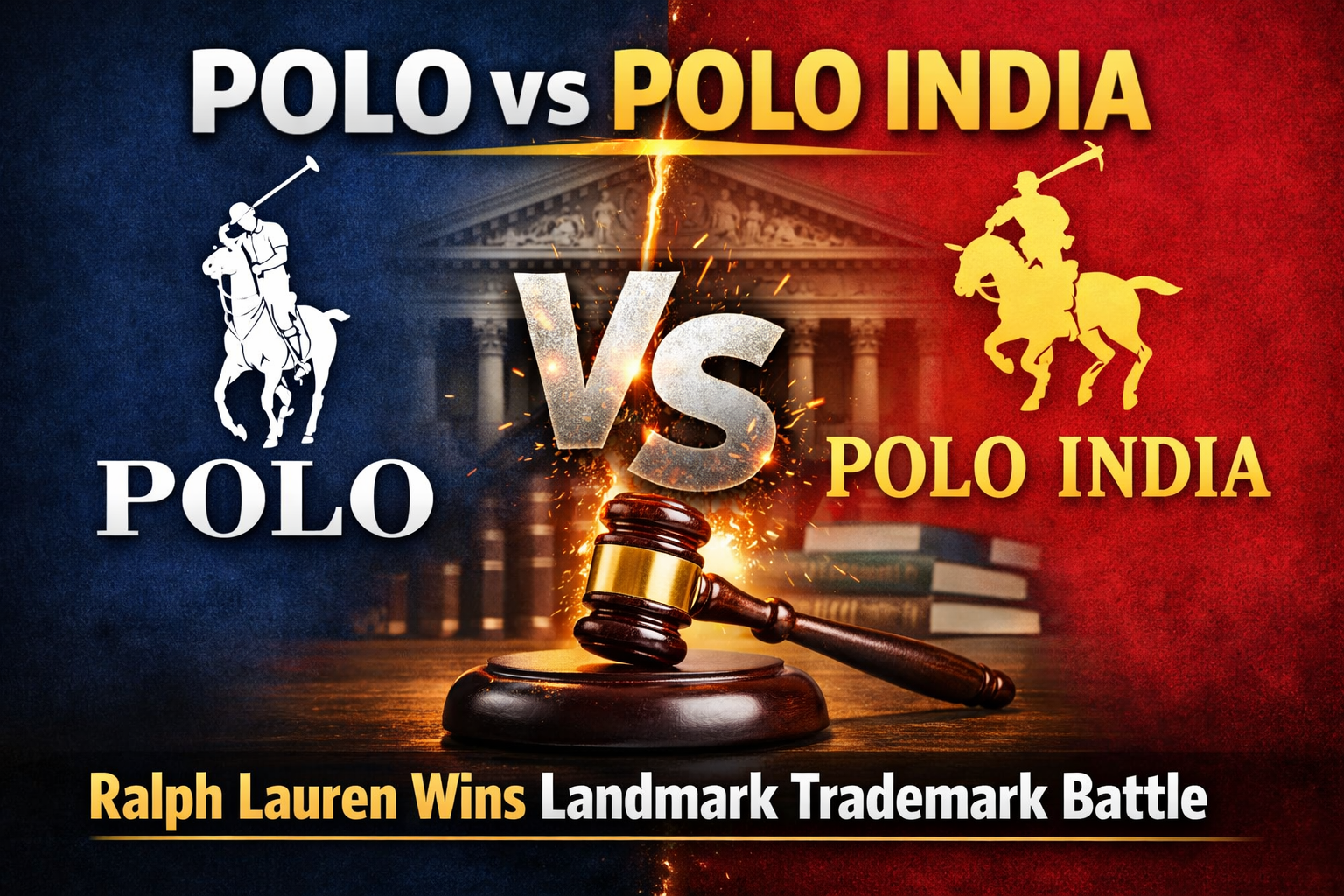
POLO VS POLO: HOW RALPH LAUREN WON AGAINST ‘POLO INDIA’ IN A MAJOR TRADEMARK SHOWDOWN”
INTRODUCTION
In July 2025, Ralph Lauren secured a significant legal victory that underscored the power and protection of global branding rights. The Delhi District Court ruled on 22 July 2025 to prohibit Polo India from using any “POLO” related trademarks in their clothing business. This decision was a significant endorsement of The Polo/Lauren Company L.P.’s longstanding trademark rights and their iconic brand identity worldwide. The court recognized that Polo India’s use of similar marks caused confusion and diluted Ralph Lauren’s distinct brand reputation. Beyond the injunction, the court awarded damages and ordered Polo India to cover the full legal expenses, sending a clear message against trademark infringement in India. This ruling highlights the importance of protecting intellectual property in a highly competitive fashion industry and strengthens global brand enforcement, showing that local companies cannot capitalize unfairly on internationally renowned trademarks. Ralph Lauren’s victory reinforces the legal safeguards that protect global brands from unauthorized use.
BACKGROUND: UNDERSTANDING THE DISPUTE
The legal dispute arose from Ralph Lauren’s assertion of its proprietary rights over the POLO trademarks, which it has used continuously since 1967. Ralph Lauren is an American brand, and it has built a strong global identity around the POLO name over the decades. These trademarks comprising the word “POLO”, the iconic Polo Player logo, and associated marks such as “POLO RALPH LAUREN” and “POLO SPORT” have acquired distinctiveness and global recognition. The trademarks are registered across multiple jurisdictions, including India, where they have been judicially recognized as ‘well-known’ under Section 2(1)(zg) of the Trademarks Act, 1999.This status affords them broader protection against infringement and dilution, even by non-identical or deceptively similar marks. Polo India, led by Gaurav and Yash Jain, began using “POLO INDIA” and “PI POLO INDIA” on apparel, attempting to register these marks in January 2022. The application was ultimately abandoned in late 2024 following opposition proceedings initiated by Ralph Lauren. However, despite the abandonment, Polo India continued using the marks. This led to claims of trademark infringement and passing off. In response, Ralph Lauren initiated legal proceedings. The civil suit before the Delhi District Court was instituted on February 3, 2025.
COURT PROCEEDINGS: DETAILED LEGAL NARRATIVE
Ralph Lauren initiated a civil suit before the Delhi District Court, invoking provisions under the Trademarks Act, 1999 and the Copyright Act, 1957, seeking permanent injunction and ancillary reliefs against Polo India. The suit was premised on claims of trademark infringement (Sections 29 and 30, TM Act), passing off, copyright violation (Section 51, Copyright Act), unfair trade practices, and a likelihood of consumer confusion due to the deceptive similarity between Ralph Lauren’s well-known trademarks and the marks adopted by Polo India.
In early 2025, upon being satisfied with the prima facie case, the court granted an ex-parte ad-interim injunction under Order XXXIX Rules 1 and 2 of the Civil Procedure Code, restraining the defendants from using ‘POLO INDIA’ or any deceptively similar marks. When Polo India failed to file a written statement or appear, the matter proceeded ex-parte. Ralph Lauren’s counsel adduced substantive documentary and digital evidence, including:
- Registered trademark certificates from India and abroad.
- Global brand valuation and marketing data.
- Substantial online presence (e.g., 9.2 million Instagram followers).
- Indian retail footprint showcasing strong market presence.
- Ownership of relevant domain names.
- A Local Commissioner’s Report under Order XXVI Rule 9 CPC, confirming infringing activities at Polo India’s premises, including the application of “POLO INDIA” tags on garments.
On 22 July 2025, the Delhi District Court delivered a detailed ex-parte final judgment in favor of Ralph Lauren. The court invoked its powers under Sections 29 and 134 of the Trademarks Act, along with Order XX CPC, to issue a permanent injunction. It restrained Polo India, its partners Gaurav Jain and Yash Jain, their affiliates, distributors, and agents from using the marks “POLO INDIA”, “PI POLO INDIA”, or any similar mark, especially in the apparel industry. The injunction also prohibited any future registration or marketing of such marks. Furthermore, under Sections 135(1) and 135(2) of the Trademarks Act, the court awarded Ralph Lauren Rs. 3,50,000 in damages and legal costs comprising Rs. 2,00,000 as compensatory damages for harm caused to its brand reputation, and Rs. 1,50,000 towards legal expenses, including the costs incurred for the Local Commissioner’s investigation. Importantly, the court reaffirmed Ralph Lauren’s marks as “well-known” under Section 2(1)(zg) of the Trademarks Act, granting them broad legal protection from dilution or misuse. The judgment found that Polo India had acted in bad faith, created a likelihood of consumer confusion, and unfairly capitalized on Ralph Lauren’s established global goodwill and brand recognition. This ruling stands as a significant precedent in Indian intellectual property law. It not only underscores the judiciary’s firm stance on protecting well-known trademarks but also demonstrates the courts’ readiness to grant both injunctive and monetary relief in clear-cut cases of deliberate infringement.
CONCLUSION
The Delhi District Court’s judgment in favor of The Polo/Lauren Company L.P. reinforces the strong legal protection granted to well-known trademarks under the Trademarks Act, 1999. By granting a permanent injunction against Polo India and awarding damages and legal costs, the Court has reinforced the principle that unauthorized use of deceptively similar marks constitutes infringement, passing off, and unfair competition. The ruling acknowledges Ralph Lauren’s significant goodwill and the distinctiveness of its POLO marks, recognizing the potential for consumer confusion and brand dilution resulting from Polo India’s actions. This judgment not only protects Ralph Lauren’s proprietary rights but also serves as a deterrent to local entities seeking to exploit established global brands through bad-faith use. It underscores India’s commitment to strong intellectual property enforcement and fair market practices, affirming that the judiciary will provide robust remedies to protect brand equity. The case thus sets a significant precedent for trademark enforcement in India’s fashion industry and beyond.
Leave a Reply