
INTRODUCTION
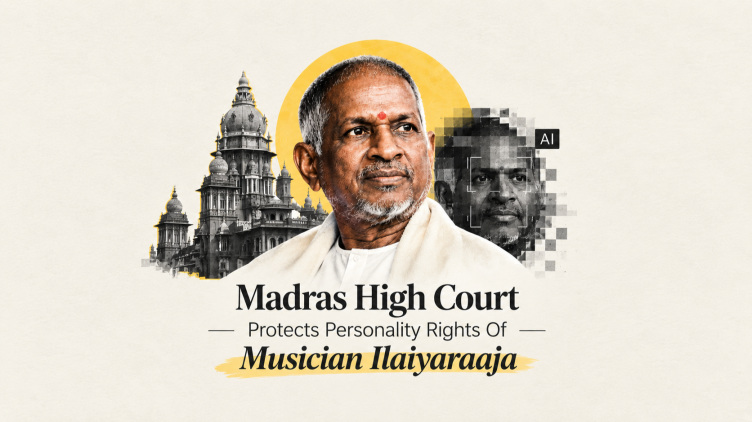
Ilaiyaraaja is widely regarded as one of India’s most influential composers whose work has shaped the country’s musical and cultural landscape. In November 2025, Ilaiyaraaja approached the Madras High Court to protect something more personal than his music his very identity. The Court granted him interim protection over his personality rights, restraining the unauthorized use of his image, voice, and likeness, particularly in the rapidly expanding domain of AI-generated content. This case transcends celebrity protection and marks a potentially significant development in judicial responses to the digital misuse of identity in the age of deepfakes.
BACKGROUND
- Who is Ilaiyaraaja?
Ilaiyaraaja is one of India’s most prolific and celebrated composers. Over his long career, he has composed thousands of songs, background scores for films across multiple languages and has left an indelible mark on Indian music. In his legal pleadings, he highlighted the scale of his contributions; thousands of songs, over a thousand films, and decades of creative work.
2. Rise of Digital Exploitation
According to Ilaiyaraaja’s petition, various digital platforms, YouTube channels, social media accounts (Facebook, Instagram, X), content creators have been using his photographs, voice, and other identifying traits without his consent. More alarmingly, some of this content is AI‑generated: deepfake-style visuals, morphed images, animated caricatures, and voice clones. These manipulated or fake depictions are not just being shared casually; they are being monetized used in reels, memes, or videos that generate advertising revenue. Ilaiyaraaja’s team also pointed out that some generated content could be defamatory, for instance, AI-edited images portraying him with altered skin tone, which potentially tarnish his reputation.
LEGAL ISSUES
Several important legal questions arise in this case:
- Personality / Publicity Rights: At the heart of Ilaiyaraaja’s plea is the recognition of personality rights; the right to control the commercial use of one’s likeness, name, voice, and other identifiable attributes. Madras HC acknowledged that these rights merit protection. The court noted that the plaintiff made out a prima facie case: there is credible evidence that his personality attributes are being misused without authorization. Specifically, Justice N. Senthilkumar’s interim order restrains the defendants from exploiting his “name and image, photographs, comical and animated image, voice or any attributes identifiable with him without his authorization.”
- AI-Generated Content: A central part of the dispute is the use of AI‑driven impersonation deepfakes, voice cloning, morphed visuals. The court appears to treat these as falling under personality rights because they are “identifiable attributes” of Ilaiyaraaja. The court also relied on earlier cases (including from Delhi HC) that recognized such AI impersonation as a potential violation of personal rights.
- Interim Injunction: Given the prima facie case the court granted an interim injunction. Respondents including major digital platforms such as Amazon, YouTube, Facebook, Google, Sony Music and others have been asked to file counter-affidavits by 19 December 2025. The court will then proceed further based on the responses.
- Balance of Interests: Ilaiyaraaja’s counsel clarified that he does not object to the public listening to his songs, or his name being mentioned what he objects to is unauthorized, commercial exploitation of his persona for profit. The court seems to agree that commercial misuse, especially without consent and via manipulated visuals or voice, tilts the balance in his favor.
SIGNIFICANCE AND IMPLICATIONS
- This case could become a milestone for celebrities’ legal protections against AI-generated misuse of their identity. By granting a restraining order, the court signals that deepfakes and cloned voices are not outside personal rights.
- Ilaiyaraaja’s fight is not merely about reputation, but commercial control. In the digital age, personas themselves become monetizable assets and this judgment could empower public figures to protect that asset legally. Platforms that rely on user‑generated content may need to re-evaluate how they moderate, label, or monetize content that features celebrities, especially when AI is involved.
- Ilaiyaraaja framed some of the misuse as an “affront to his contributions to Indian culture” beyond commercial loss, there’s a cultural integrity argument. For a composer of his stature, unauthorized caricatures, memes, or deepfakes can dilute the gravitas and reverence associated with his work.
- While an interim injunction is a strong first step, enforcement on the internet is notoriously difficult. Identifying all infringing users (especially across anonymous channels) could be a major challenge. There may also be pushback on free expression grounds: where to draw the line between parody / satire (which may be protected) and commercial exploitation.
CONCLUSION
The Madras High Court’s interim order in favor of Ilaiyaraaja reflects the evolving intersection of personality rights, digital platforms, and artificial intelligence. As technology enables easier manipulation and replication of personal traits voice, image, likeness the legal system must adapt to protect individuals’ identity and legacy. For Ilaiyaraaja, a titan of music, this is not just about protecting his brand it’s about preserving the dignity of a lifelong artistic journey. This case is likely to be watched closely by other celebrities, lawyers, platform regulators, and AI ethicists. Its final outcome could shape how courts in India and perhaps elsewhere balance innovation, digital freedom, and personal rights in the age of deepfakes.
Leave a Reply