BACKGROUND: THE RISE OF NAME AS IDENTITY AND ASSET
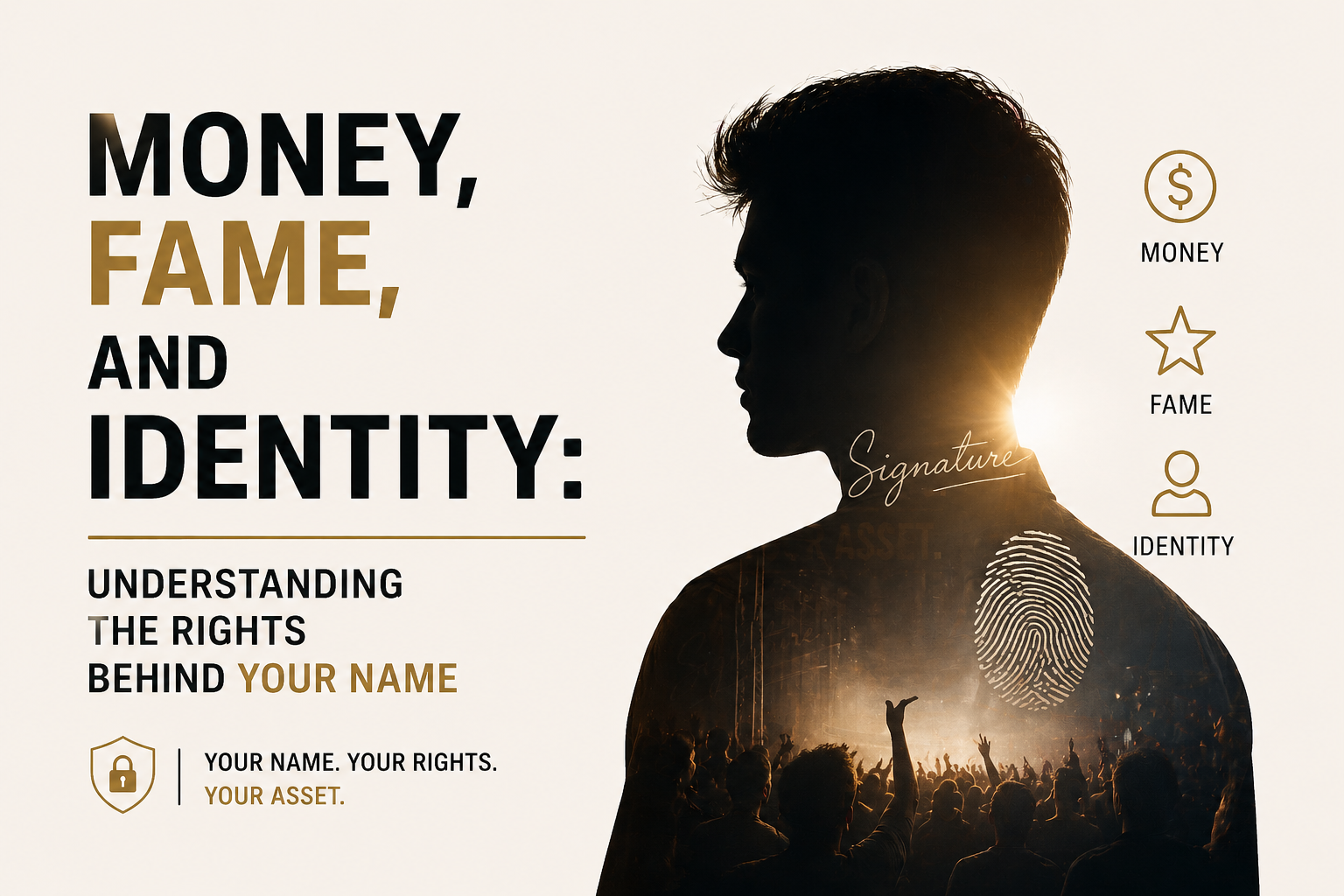
“What’s in a name?” Shakespeare’s famous question was meant to suggest that names are just labels. But in India’s rapidly evolving media and digital landscape, a name can mean everything identity, power, reputation, and even serious money. In a country obsessed with celebrity culture, from Bollywood superstars to cricket legends, the name, image, and voice of a person often become brands in themselves. This growing significance has brought forward the concept of publicity rights the right of an individual to control the commercial use of their identity, including their name, image, likeness, voice, signature, and other personal attributes.
This concept is not just relevant for celebrities. In today’s digital world, influencers, content creators, streamers, and even viral meme subjects are becoming public figures overnight. A single viral video can catapult a person into the public eye, and companies may attempt to cash in on that popularity through unauthorized endorsements or parodies. As personal identity becomes intertwined with commercial value, the law has been forced to catch up. While the U.S. and some other jurisdictions have codified these rights, India still relies on judicial precedents and general legal principles to protect publicity rights.
JUDICIAL RECOGNITION: KEY INDIAN CASES ON PUBLICITY RIGHTS
In India, the legal recognition of publicity rights has largely come through the judiciary. One of the landmark cases in this area is ICC Development (International) Ltd. v. Arvee Enterprises & Anr., 2003 (26) PTC 245 (Del), where the Delhi High Court stated that “the right of publicity has evolved from the right of privacy and can be inherent in an individual or in any aspect of an individual’s personality.” The court recognized that unauthorized use of a person’s identity in advertising, even without defamation or misrepresentation, could amount to unfair commercial gain.
A stronger reinforcement came in D.M. Entertainment Pvt. Ltd. v. Baby Gift House & Ors., 2003 (27) PTC 279 (Del), where Daler Mehndi’s management company successfully sued a toy manufacturer for selling dolls resembling the singer, complete with his signature costume and name. The court held that this violated Mehndi’s personality rights, highlighting that “fame is not free” and cannot be commercially exploited without consent. The case emphasized that personality rights are proprietary and can be assigned or licensed like other forms of intellectual property.
Since then, courts have continued to shape the jurisprudence around publicity rights. For instance, in Titan Industries Ltd. v. M/s Ramkumar Jewellers, 2012 (50) PTC 486 (Del), the court restrained the defendant from using images of Amitabh Bachchan and Jaya Bachchan without permission in jewelry ads. The court noted that celebrities have a commercial interest in their identity, and unauthorized use can mislead consumers and damage reputations.
MODERN RELEVANCE: SOCIAL MEDIA, INFLUENCERS, AND DIGITAL BRANDING
The explosion of digital content and influencer marketing in India has made publicity rights more relevant than ever. Social media platforms like Instagram, YouTube, and X (formerly Twitter) have given rise to a new class of public personalities who rely on personal branding for income. Influencers often trademark their usernames, logos, or catchphrases and enter into influencer marketing deals, much like traditional celebrities. Unauthorized use of their image in promotions, fan merchandise, or fake accounts can directly affect their earnings and reputation.
Celebrities, too, have adapted. Shah Rukh Khan, for instance, has carefully managed his brand across endorsements, cricket team ownership, and digital appearances. Athletes like Virat Kohli and M.S. Dhoni have built massive commercial empires around their name and persona. In such cases, their identity isn’t just personal it’s a monetized asset.
Moreover, with the rise of AI-generated content and deepfakes, even likenesses can be manipulated to create synthetic endorsements. Imagine a celebrity’s face being used in a fake skincare ad without their knowledge or consent. Such misuses blur the line between real and synthetic identity, prompting the urgent need for legal safeguards. Publicity rights provide one of the few existing frameworks that can address these issues in the absence of AI-specific regulation.
LEGAL GAPS: ABSENCE OF STATUTORY FRAMEWORK
Despite the growing importance of publicity rights, India lacks a dedicated statute. The absence of codified law creates uncertainty about the scope, duration, inheritance, and transferability of these rights. Currently, courts rely on overlapping legal principles, including the Tort of Passing Off, Trademark Law (Trade Marks Act, 1999), Copyright Act, 1957, and the Constitutional Right to Privacy under Article 21 (as expanded in Justice K.S. Puttaswamy v. Union of India, (2017) 10 SCC 1).
In Gautam Gambhir v. D.A.P. & Co., CS (COMM) 395/2017, the Delhi High Court considered whether the use of the phrase “by Gautam Gambhir” by a restaurant chain misled consumers into thinking it was endorsed by the cricketer. The court ruled that since the restaurant had legitimately registered the name and there was no evidence of misrepresentation or exploitation of the cricketer’s fame, the claim failed. This case demonstrated that not all uses of a celebrity name will constitute infringement context, intent, and likelihood of confusion all matter.
There’s also ambiguity around posthumous publicity rights should a celebrity’s estate control their name and likeness after death, and for how long? Internationally, jurisdictions like California recognize posthumous rights for up to 70 years. In India, this is still a grey area, although estates (like those of Raj Kapoor or Sridevi) are beginning to explore protection mechanisms.
FUTURE OUTLOOK: THE NEED FOR A COMPREHENSIVE PUBLICITY RIGHTS LAW
As India becomes more digitally connected and its entertainment industry continues to globalize, the commercial value of personal identity is only going to rise. Celebrities, influencers, and even ordinary individuals with large followings will increasingly face the challenge of protecting their personal brand. The misuse of names and images through fake endorsements, deepfakes, and AI-generated content adds new layers of complexity. Without clear legislation, individuals must currently rely on the courts for protection, but this piecemeal approach may not be sustainable in the long run. A dedicated statute on publicity rights in India possibly aligned with data protection and intellectual property laws could help establish consistent standards and offer clarity to individuals and businesses alike.
CONCLUSION
In conclusion, in today’s India, a name is no longer just a name. It is identity, capital, and in many cases, property. The law is beginning to reflect this shift, albeit gradually. As public personalities increasingly take legal action to protect the commercial use of their persona, it’s clear that the question “What’s in a name?” has a very modern Indian answer: fame, money, and the legal right to own and protect your identity.


Leave a Reply