
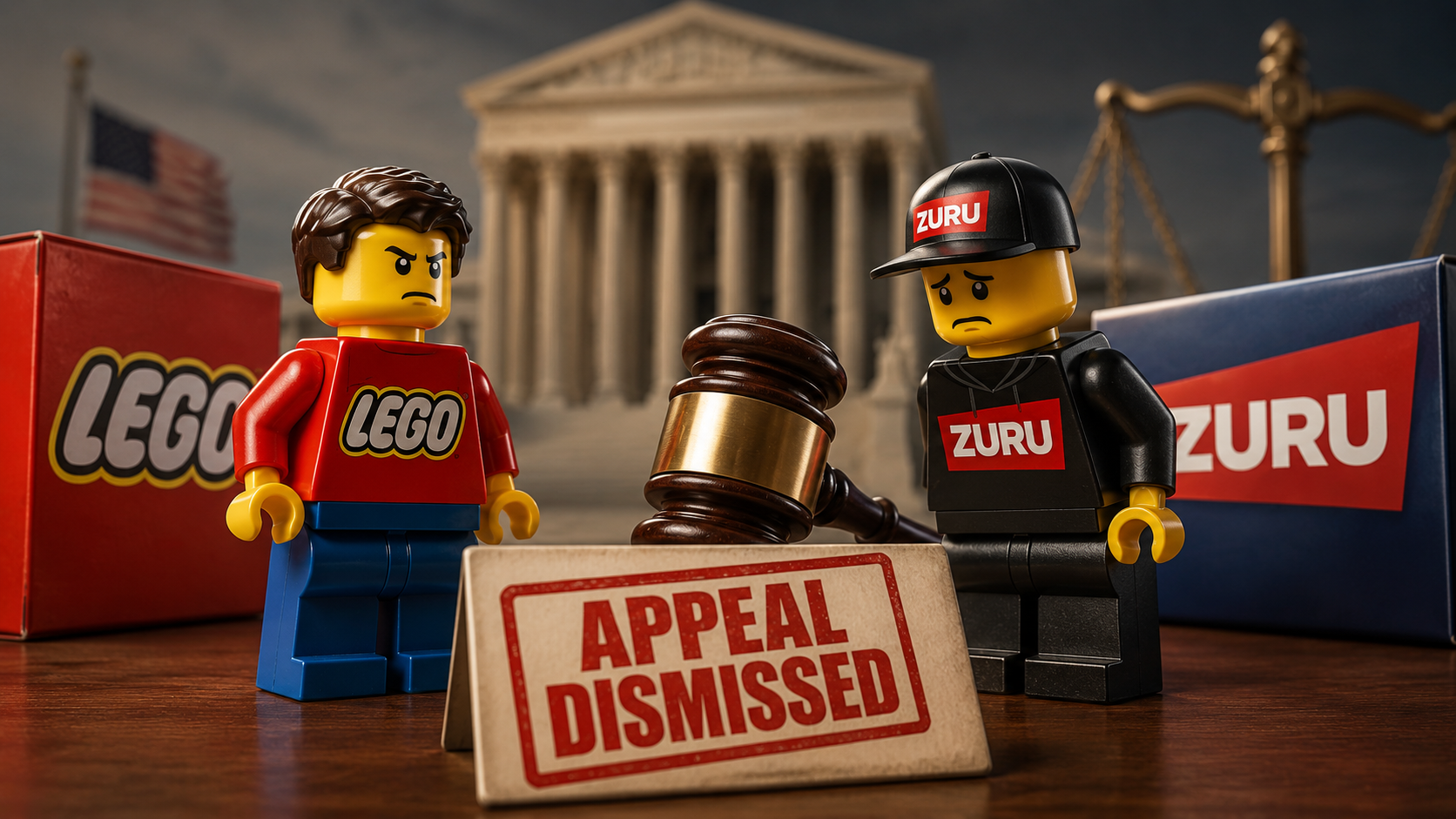
Rejection of ZURU’s appeal against LEGO in the US court
Background of the LEGO–ZURU Dispute
LEGO, one of the world’s most recognisable toy brands, has long relied on a combination of copyright, trademark, and trade dress protection to safeguard its iconic construction toy ecosystem. Over the years, it has actively enforced its intellectual property rights against competitors manufacturing LEGO-compatible or visually similar products. ZURU, a multinational toy company known for its affordable and innovative toy lines, get involved in litigation after LEGO alleged that certain ZURU products unlawfully copied its protected designs and branding.
On 12 September 2023, LEGO instituted a suit before the United States District Court for the District of Connecticut, alleging that ZURU’s minifigure-style construction toys infringed its copyrighted works and registered trademarks.
LEGO contended that the overall appearance, structure, and branding of ZURU’s products were deceptively similar to its iconic Minifigure design, resulting in a likelihood of consumer confusion and dilution of LEGO’s substantial global goodwill. During the pendency of the proceedings, the trial court passed an interim order, which ZURU sought to challenge by filing an appeal before the United States Court of Appeals for the Second Circuit.
Decision of the Trial Court
The U.S. District Court, while considering LEGO’s request for interim relief, found that ZURU’s Second- and Third-Generation minifigures remained substantially similar to LEGO’s protected Minifigure design. The court held that LEGO had demonstrated a strong prima facie case of copyright and trademark infringement and that continued sale of the impugned products was likely to cause consumer confusion and irreparable harm. On this basis, the trial court enforced and extended injunctive relief restraining ZURU from manufacturing and selling the disputed minifigures in the United States, pending final adjudication of the suit.
LEGO alleged that ZURU’s minifigure-style toys infringed its intellectual property rights by copying LEGO’s copyright-protected LEGO Minifigure design and infringing its registered LEGO trademarks. It was contended that the substantial similarity in the overall shape and appearance of the products was likely to cause consumer confusion, dilute the distinctiveness of LEGO’s well-known marks, and amount to trade dress infringement and unfair competition by misappropriating LEGO’s goodwill.
Aggrieved by the interim findings and the continuation of injunctive relief granted by the trial court, ZURU preferred an appeal before the United States Court of Appeals for the Second Circuit.
What ZURU Asked the Second Circuit to Do
Rather than waiting for the trial court to finally resolve the dispute, ZURU attempted to appeal at an interim stage. While parties often seek early appellate intervention to avoid the cost and burden of prolonged litigation, U.S. law permits such appeals only in narrowly defined circumstances.
ZURU’s appeal effectively asked the Second Circuit to review a non-final order passed by the lower court. The precise substance of the order was less important than its procedural character: it did not conclusively determine the rights of the parties or bring the litigation to an end. This procedural posture proved decisive.
The Core Issue: Appellate Jurisdiction in the United States
U.S. appellate courts are courts of limited jurisdiction. Unlike trial courts, they cannot hear every grievance or disagreement that arises during litigation. Their authority is largely governed by the “final judgment rule,” a foundational principle of American civil procedure.
Under this rule, parties may generally appeal only after the trial court has issued a final decision one that resolves all claims as to all parties. The purpose of this rule is to prevent fragmented, piecemeal appeals that could disrupt proceedings, increase costs, and burden appellate courts.
Why the Second Circuit Dismissed the Appeal
In dismissing ZURU’s appeal, the Second Circuit held that the impugned order was neither a final judgment nor one falling within any recognised exception permitting immediate appellate review, and therefore the court lacked jurisdiction to hear the appeal.
Significantly, the Court did not examine the validity of LEGO’s copyrights, the alleged infringement, consumer confusion, or claims of dilution and unfair competition. The dismissal was purely procedural and does not reflect any endorsement of LEGO’s claims or rejection of ZURU’s defences, with all substantive issues remaining open for determination by the trial court.
Why This Decision Matters in IP Litigation
Although procedural in nature, the ruling carries broader implications for intellectual property litigation in the United States.
- Strict Enforcement of the Final Judgment Rule
The decision reinforces the judiciary’s reluctance to entertain mid-stream appeals. Even in commercially significant IP disputes, appellate courts will not relax jurisdictional standards simply because the stakes are high.
- Strategic Risks of Premature Appeals
Attempting to appeal too early can result in wasted time, increased costs, and potential strategic disadvantages. Parties must carefully assess whether an interim order is truly appealable before approaching an appellate court.
- IP Litigation Is Not Immune from Procedural Discipline
Copyright and trademark disputes often involve urgent business concerns, but they are still governed by the same procedural constraints as other civil cases. Courts consistently emphasise that procedural compliance is not optional.
Implications for Brand Owners and Defendants
For brand owners like LEGO, the ruling allows enforcement actions to proceed uninterrupted at the trial level. It also underscores the advantage of securing strong interim orders that are insulated from immediate appellate review.
For defendants like ZURU, the decision highlights the importance of litigation planning. In jurisdictions like the United States, defendants may need to endure the full trial process before gaining access to appellate scrutiny, even where they strongly dispute interim rulings.
This procedural reality can influence settlement dynamics, litigation timelines, and overall enforcement strategies.
What Happens Next in the LEGO–ZURU Case
With the appeal dismissed, the dispute returns squarely to the trial court. The parties will continue litigating the substantive questions of copyright and trademark infringement, unless the matter is resolved through settlement or other procedural developments.
Only once the trial court issues a final judgment or an appealable order within a recognised exception will the Second Circuit be empowered to review the case on its merits.
Conclusion
The Second Circuit’s dismissal of ZURU’s appeal in the LEGO copyright and trademark dispute is a textbook example of procedural discipline in U.S. appellate practice. By refusing to entertain a premature appeal, the court reaffirmed the centrality of jurisdictional limits and the final judgment rule.
While the substantive battle between LEGO and ZURU remains unresolved, the ruling offers a clear lesson for intellectual property litigants: appellate courts are not venues for early tactical challenges. In the United States, parties must generally see their cases through to conclusion before seeking appellate intervention.
For businesses navigating high-stakes IP disputes, the decision underscores that procedural strategy can be just as decisive as substantive rights.

Leave a Reply